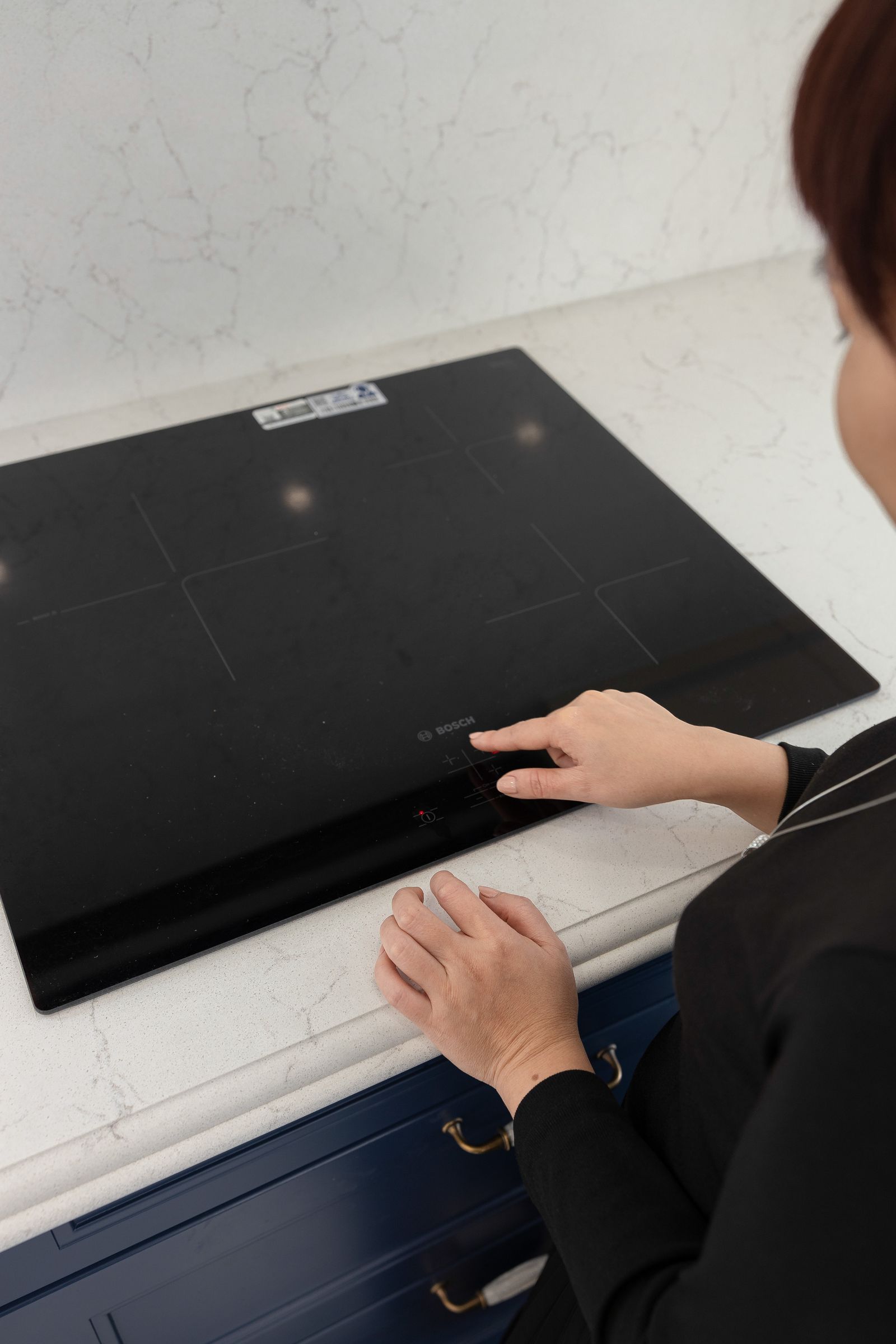
Of all the gas appliances in a typical home, the cooktop uses the least energy. So why swap it? Usually because it’s the last thing keeping the house on gas, and the daily supply charge doesn’t shrink just because you only boil pasta on it. Health is another reason: unflued gas cooking releases combustion gases into the kitchen, which is why a good rangehood matters so much with gas.
Here’s what changes when you go to induction, and the practical things to check first.
How induction works
An induction zone has a copper coil under the glass. When you switch it on, the coil creates a magnetic field that heats the base of a compatible pan directly. The glass itself only gets warm from contact with the hot pan. That’s why induction responds almost instantly and why spills don’t bake onto the surface the way they do on ceramic.
Will my pans work?
Induction needs pans with a magnetic base. The quick test: if a fridge magnet sticks firmly to the bottom, it’ll work. Cast iron, most stainless steel and enamelled steel are fine. Aluminium, copper and glass won’t work unless they have a bonded steel base. Most households find they need to replace one or two pans, not the whole set.
The cut-out is the first thing to check
Benchtop cut-outs aren’t standard. A 600mm gas cooktop and a 600mm induction cooktop can need different hole sizes, and induction units are thinner, with different clearance and ventilation needs underneath. Measure your existing cut-out (width and depth of the hole, not the cooktop glass) and compare it with the installation manual of any model you’re considering. Some brands make models designed to drop into common gas cut-outs; otherwise a stonemason or cabinet maker may need to adjust the hole, or you’ll need a filler trim.
Power supply
A full-size induction cooktop typically needs its own dedicated circuit, often 32 amps for a 4 or 5 zone unit. Some smaller or “plug-in” models run on a standard 10 or 15 amp circuit with power limits. Have an electrician check:
- whether there’s spare capacity in your switchboard;
- the cable run from the switchboard to the kitchen;
- whether your main supply can handle the extra load if you’re also adding a heat pump and reverse-cycle heating.
Older switchboards sometimes need an upgrade, and that can cost more than the cooktop. Get it quoted up front.
What cooking feels like
Expect a short adjustment period. Induction is faster than gas: a pot of water boils noticeably quicker, and high settings are genuinely high. Most people find themselves cooking a notch lower than they expected. You lose the visual cue of the flame, so watch the pan, not the burner. Woks are the common complaint; a flat-bottomed wok works, and some cooktops have a dedicated wok zone or a curved accessory.
Safety is better in a few ways: no open flame, the zone switches off when the pan is removed, and most models have child locks and automatic shut-off timers.
Capping the gas
When the cooktop comes out, a licensed gas fitter needs to cap the gas line safely. If it’s the last gas appliance in the house, ask about capping it further back so you’re not leaving a live line in the kitchen, and then look at closing the gas account entirely. We explain the options in getting off gas completely.
A cheap way to try it first
If you’re unsure, buy a single portable induction plate for under $100 and use it for a few weeks. You’ll learn whether your pans work, how you like cooking on it, and whether the family will adapt, before committing to new benchtop work.
The Australian Government’s Energy.gov.au household pages have general guidance on choosing efficient appliances if you want a second opinion.
Figures and rules in this guide were checked in November 2026. Rebates change often, so confirm current amounts on the official sites linked above.